
How to Turn Knowledge into Culture
How to Turn Knowledge into Culture
Every business has knowledge. The most successful businesses turn that knowledge into culture.
Policies, procedures, training materials, and years of experience are valuable resources, but they only make a difference when employees apply them consistently. A strong workplace culture isn’t built by writing a mission statement or holding an annual team meeting. It’s created through the everyday habits, behaviors, and decisions that define how work gets done.
For small business owners, creating a positive culture starts with sharing knowledge in a way that employees understand, embrace, and carry forward.
Culture Starts with Leadership
Employees pay close attention to how leaders communicate, solve problems, and interact with others. Those daily actions often have a greater impact than any handbook or training manual.
If leaders prioritize accountability, collaboration, and respect, employees are more likely to do the same. On the other hand, when expectations are inconsistent or policies are ignored, it becomes difficult to build a healthy workplace culture.
Leading by example is one of the most effective ways to reinforce the values you want your organization to reflect.
Share Knowledge Early and Often
Many businesses provide information during onboarding but rarely revisit it.
Employees benefit from regular reminders, updates, and opportunities to continue learning. Reinforcing important topics helps create consistency across the organization and ensures everyone understands current expectations.
Consider incorporating ongoing learning through:
- Monthly team meetings
- Refresher training sessions
- Safety discussions
- Leadership workshops
- Process improvement meetings
- Industry updates
When learning becomes part of everyday business, employees are more likely to apply what they’ve learned.
Turn Processes into Everyday Habits
Having documented procedures is important, but documentation alone doesn’t create consistency.
The strongest organizations encourage employees to use established processes every day. This reduces confusion, improves efficiency, and creates a more predictable experience for both employees and customers.
Ask yourself:
- Are employees following documented procedures?
- Are managers reinforcing company expectations?
- Are new hires learning the same processes as experienced employees?
- Are procedures reviewed and updated regularly?
When everyone works from the same playbook, your business becomes more efficient and easier to scale.
Encourage Employees to Share What They Know
Knowledge shouldn’t stay with one employee or one department.
Encouraging employees to share ideas, mentor coworkers, and document best practices helps strengthen your entire organization. It also reduces the risk of losing valuable knowledge when employees take vacations, change roles, or leave the company.
Simple ways to encourage knowledge sharing include:
- Cross-training employees
- Creating standard operating procedures
- Holding team knowledge-sharing sessions
- Encouraging mentorship
- Documenting recurring processes
When knowledge is shared, the entire team becomes stronger.
Recognize the Behaviors You Want to See
Culture isn’t shaped only by what leaders say. It’s reinforced by what leaders recognize.
Employees notice which behaviors receive attention. When teamwork, accountability, innovation, and excellent customer service are consistently recognized, those behaviors become part of the organization’s identity.
Recognition doesn’t have to be elaborate. A simple thank you during a meeting, acknowledging a job well done, or celebrating team accomplishments can reinforce positive behaviors and improve morale.
Over time, these small moments help define the culture employees experience every day.
Make Continuous Improvement Part of Your Culture
Strong cultures continue to evolve.
Successful businesses regularly evaluate what’s working, gather employee feedback, and make adjustments when needed. Encouraging employees to suggest improvements creates a workplace where innovation and collaboration become part of daily operations.
Consider asking questions such as:
- What processes slow us down?
- What tools would make work easier?
- Where can communication improve?
- What training would help employees succeed?
Listening to employee feedback demonstrates that leadership values their perspectives and is committed to continuous improvement.
Culture Is Built One Decision at a Time
Company culture isn’t created overnight, and it isn’t defined by a single initiative.
It’s built through consistent leadership, ongoing learning, open communication, and shared accountability. Every conversation, training session, policy update, and recognition effort contributes to the environment employees experience each day.
When businesses turn knowledge into everyday actions, they create workplaces where employees understand expectations, support one another, and work toward common goals.
A strong culture doesn’t just improve employee satisfaction. It strengthens productivity, encourages retention, and helps businesses adapt as they grow.
Build a Workplace Culture That Lasts with TEL Staffing & HR
Creating a strong workplace culture requires more than good intentions. It takes clear policies, effective onboarding, ongoing employee development, and HR practices that support your business goals.
TEL Staffing & HR partners with small businesses to simplify payroll, HR administration, compliance, staffing, benefits, and risk management. With the right HR foundation in place, you can spend less time managing paperwork and more time building a workplace where employees and your business can thrive.


Top 5 HR Lessons Every Leader Should Learn
Top 5 HR Lessons Every Leader Should Learn
When people think about growing a business, they often focus on increasing sales, improving operations, or expanding into new markets. While those goals are important, none of them can happen without the right people behind them.
Human resources is more than hiring and payroll. It’s about creating an environment where employees understand expectations, feel supported, and have the tools they need to succeed.
Whether you have five employees or fifty, these five HR lessons can help you become a stronger leader while building a healthier, more successful workplace.
Lesson 1: Hire for More Than Skills
Technical skills matter, but they aren’t the only factor that determines whether someone will succeed in your organization.
Employees who align with your company’s values, communicate well, and are willing to learn often become your strongest long-term contributors. While technical skills can be developed through training, qualities like accountability, adaptability, and teamwork are much harder to teach.
During the hiring process, consider how candidates will contribute to your workplace culture in addition to meeting the job requirements.
A thoughtful hiring process can lead to stronger teams, lower turnover, and better long-term performance.
Lesson 2: Clear Communication Prevents Bigger Problems
Many workplace issues aren’t caused by poor performance. They’re caused by unclear expectations.
Employees should understand:
- Their responsibilities
- Company policies
- Performance expectations
- How success is measured
- Where to go with questions or concerns
Regular communication also helps managers identify challenges before they become larger issues.
Whether it’s a weekly team meeting, monthly one-on-ones, or consistent feedback, open communication creates trust and keeps everyone moving in the same direction.
Lesson 3: Consistency Matters
One of the fastest ways to create frustration in the workplace is to apply policies differently from one employee to another.
Consistency builds trust because employees know they’ll be treated fairly.
That includes being consistent with:
- Attendance policies
- Performance reviews
- Corrective action
- Promotions
- Workplace expectations
- Employee recognition
Having documented policies and following them consistently helps reduce confusion while protecting your business from unnecessary risk.
Lesson 4: Compliance Is an Ongoing Responsibility
Employment laws change regularly, and staying compliant isn’t something businesses should only think about during an audit or after a problem arises.
Business leaders should regularly review:
- Employee classifications
- Payroll practices
- Required workplace postings
- Employee records
- Leave policies
- Wage and hour compliance
Making compliance part of your routine helps reduce legal risks and allows you to focus on running your business with confidence.
For many small businesses, partnering with an HR provider can make it easier to stay current with changing regulations.
Lesson 5: Your Culture Is Built Every Day
Company culture isn’t defined by a mission statement hanging on the wall. It’s shaped by the everyday experiences employees have with leadership, coworkers, and customers.
The way leaders communicate, recognize achievements, handle challenges, and respond to feedback all influence workplace culture.
Businesses with strong cultures often see:
- Higher employee engagement
- Better retention
- Improved collaboration
- Greater productivity
- Stronger customer experiences
Culture develops over time through consistent actions, not occasional initiatives.
Every conversation, policy, and leadership decision contributes to the environment employees experience each day.
Strong HR Creates Strong Leaders
The best leaders recognize that people are their greatest asset.
By hiring thoughtfully, communicating clearly, applying policies consistently, maintaining compliance, and building a positive culture, business owners create workplaces where employees can do their best work.
These aren’t one-time tasks. They’re ongoing practices that strengthen your organization and prepare it for future growth.
Whether you’re leading a small team or managing a growing company, investing in your people is one of the most valuable investments you can make.
Partner with TEL Staffing & HR
Managing HR responsibilities while running a business can be challenging, especially as your workforce grows.
TEL Staffing & HR helps small businesses simplify HR through payroll administration, staffing solutions, compliance support, benefits administration, and risk management services. Our experienced team works alongside business owners to build strong HR foundations that support long-term success.
If you’re ready to strengthen your HR practices and spend more time focusing on your business, we’re here to help.

Back to Business Basics: Strengthen Your HR Foundation
Back to Business Basics: Strengthen Your HR Foundation
As summer winds down, many business owners begin shifting their focus toward finishing the year strong. While it’s common to revisit budgets, sales goals, and operations, one area often gets overlooked: human resources.
A solid HR foundation supports nearly every part of your business. From hiring the right employees to maintaining compliance with changing regulations, effective HR practices create stability, reduce risk, and help your team perform at its best.
Whether your business has five employees or fifty, taking time to strengthen your HR processes now can make the rest of the year significantly smoother.
Start with Clear Policies
Your employee handbook should be more than a document that sits in a file cabinet. It establishes expectations, outlines company policies, and helps ensure employees receive consistent information.
If your handbook hasn’t been reviewed in the past year, now is a good time to update it.
Consider reviewing:
- Attendance and time-off policies
- Workplace conduct expectations
- Safety procedures
- Remote or hybrid work policies
- Leave policies
- Technology and cybersecurity guidelines
Even small policy updates can help prevent misunderstandings and protect your business if issues arise later.
Review Your Hiring Process
Great employees often decide whether to accept a job based on the experience they have before their first day.
Ask yourself:
- Are job descriptions current?
- Is your interview process consistent?
- Are candidates receiving timely communication?
- Is onboarding organized and welcoming?
Improving these areas not only creates a better first impression but can also reduce turnover by helping new employees feel confident from day one.
Make Compliance Part of Your Routine
Employment laws continue to evolve, and staying compliant isn’t something businesses should only think about during an audit.
Regularly reviewing HR practices helps reduce the risk of:
- Wage and hour violations
- Incomplete employee documentation
- Misclassified workers
- Missing required workplace notices
- Outdated employment policies
Many compliance issues develop gradually over time. Routine reviews make it easier to identify small problems before they become costly ones.
Evaluate Your Payroll Process
Payroll is one of the most visible responsibilities within any business. Employees expect to be paid accurately and on time, every time.
Take a moment to evaluate whether your payroll process is:
- Accurate
- Secure
- Efficient
- Compliant with tax requirements
- Easy for employees to access
If payroll requires multiple spreadsheets, manual calculations, or hours of work each pay period, it may be time to consider a more efficient solution.
Invest in Your Employees
Strong HR isn’t only about policies and paperwork. It’s also about creating an environment where employees can succeed.
Businesses with engaged employees often experience:
- Better productivity
- Higher employee retention
- Improved customer service
- Stronger workplace culture
- Greater long-term growth
Simple investments such as training opportunities, regular feedback, employee recognition, and career development can have a lasting impact on morale.
Build Systems That Can Grow with Your Business
As your company grows, HR responsibilities become more complex.
Adding employees often means managing:
- Benefits administration
- Workers’ compensation
- Payroll taxes
- Recruiting
- Compliance requirements
- Performance management
Creating organized HR systems today helps ensure your business can scale without unnecessary stress tomorrow.
Instead of constantly reacting to new challenges, you’ll have processes already in place to support continued growth.
Back to Basics Doesn’t Mean Starting Over
Strengthening your HR foundation isn’t about making dramatic changes overnight. It’s about making sure the basics are working well.
Review your policies. Evaluate your hiring process. Check your compliance practices. Look for opportunities to improve payroll and employee support.
These small steps create a stronger business, a better employee experience, and a foundation that supports long-term success.
As you prepare for the busy months ahead, investing in your HR processes is one of the smartest business decisions you can make.
Build a Stronger HR Foundation with TEL Staffing & HR
Managing HR can quickly become overwhelming as your business grows, but you don’t have to do it alone.
TEL Staffing & HR helps small businesses simplify payroll, HR administration, compliance, benefits, risk management, and staffing so owners can spend less time on paperwork and more time running their business.
Whether you’re strengthening your HR foundation or preparing for future growth, our local team is here to help.
Book your free consultation and quote today.

Why Training Is the Secret to Retention
Why Training Is the Secret to Retention
Hiring great employees is only half the battle. Keeping them is where many businesses struggle.
Employee turnover is expensive. Replacing an employee can cost thousands of dollars in recruiting, onboarding, training, and lost productivity. While competitive pay and benefits play an important role, one factor is often overlooked: training.
Employees who feel supported in their growth are more likely to stay with their employer. Ongoing learning builds confidence, strengthens engagement, and shows employees they’re valued beyond the work they do today.
For small businesses, investing in training isn’t just about developing skills. It’s one of the smartest strategies for improving employee retention.
Training Shows Employees They’re Worth Investing In
One of the biggest reasons employees leave is the feeling that they’ve stopped growing.
When businesses provide opportunities to learn new skills, employees see that leadership is invested in their future. That creates a stronger sense of loyalty and encourages long-term commitment.
Training doesn’t have to involve expensive conferences or lengthy certification programs. Even simple initiatives can make a meaningful difference, including:
- Cross-training employees
- Lunch-and-learn sessions
- Leadership development workshops
- Safety training
- Industry webinars
- Software or technology training
Employees who continue learning are often more confident, productive, and engaged in their work.
Better Training Creates Better Managers
Many employees don’t leave companies. They leave managers.
New supervisors are often promoted because they excelled in their previous role, not because they’ve been trained to lead people. Without guidance, even talented employees can struggle with communication, coaching, and conflict resolution.
Leadership training helps managers develop essential skills such as:
- Giving constructive feedback
- Setting clear expectations
- Motivating employees
- Handling workplace conflicts
- Building trust within their teams
Strong leadership creates a positive work environment that employees want to be part of.
A Strong Onboarding Experience Improves Retention
Employee retention begins long before annual performance reviews.
The first few weeks on the job shape how employees feel about their decision to join your company. An organized onboarding process helps new hires feel prepared, welcomed, and connected to the team.
Effective onboarding should include:
- Company policies and expectations
- Role-specific training
- Introductions to coworkers
- Safety procedures
- Technology setup
- Regular check-ins during the first 90 days
Employees who receive proper onboarding are more likely to become productive quickly and remain with the company long term.
Training Increases Employee Engagement
Employees want to know their work matters and that they have opportunities to grow.
Providing ongoing learning keeps employees engaged because it gives them new challenges and opportunities to improve. It also helps prevent work from becoming repetitive or stagnant.
Training can also encourage collaboration between departments, improve communication, and introduce employees to new responsibilities they may not have considered before.
When employees feel challenged in a positive way, they’re more likely to remain motivated and committed to the organization.
Cross-Training Strengthens Your Entire Business
Cross-training benefits more than the individual employee.
When multiple employees understand different roles, businesses become more flexible during vacations, unexpected absences, or periods of growth.
Cross-training can help:
- Reduce workflow disruptions
- Improve teamwork
- Prepare future leaders
- Increase operational efficiency
- Prevent knowledge gaps
Instead of relying on one person to perform critical tasks, your business becomes more resilient and adaptable.
Learning Creates a Stronger Workplace Culture
Training sends an important message about your company culture.
It tells employees that learning is encouraged, improvement is valued, and mistakes are opportunities to grow rather than reasons to assign blame.
Businesses that prioritize learning often experience:
- Higher employee engagement
- Better communication
- Greater innovation
- Stronger teamwork
- Improved customer service
Over time, these habits become part of the company’s culture, creating an environment where employees are motivated to succeed together.
Make Training Part of Your Long-Term Strategy
Training shouldn’t happen only during onboarding or when new software is introduced.
The most successful businesses build learning into their year-round operations by:
- Setting annual development goals
- Offering regular skills training
- Providing leadership development
- Encouraging professional certifications
- Reviewing employee progress throughout the year
Consistent development keeps employees engaged while preparing your business for future growth.
Invest in People, Strengthen Your Business
Employees are more likely to stay where they feel supported, challenged, and appreciated.
Training is one of the simplest ways to show your team that you’re invested in their success. At the same time, it strengthens your workforce, improves productivity, and builds a culture that attracts and retains talented employees.
For small businesses, investing in employee development isn’t just an HR initiative. It’s a long-term business strategy that pays dividends in retention, performance, and growth.
Help Your Team Thrive with TEL Staffing & HR
Creating effective training programs, onboarding new employees, and developing strong workplace policies takes time and expertise.
TEL Staffing & HR helps small businesses build stronger teams through HR support, staffing services, payroll administration, compliance guidance, and workforce solutions that allow business owners to focus on growing their companies.
Whether you’re looking to improve employee retention or strengthen your workplace culture, our local team is ready to help.

Freedom from HR Headaches: The Case for PEOs
Freedom from HR Headaches with Professional PEO Services
Managing employees is one of the most rewarding parts of running a business, but it also comes with growing administrative responsibilities. As your team expands, so do the demands of payroll processing, HR compliance, employee benefits administration, hiring, onboarding, and workplace policies. For many business owners, these responsibilities begin to take valuable time away from serving customers, developing new opportunities, and growing the business.
A Professional Employer Organization (PEO) helps relieve that burden by providing comprehensive HR outsourcing and payroll services that allow businesses to focus on what they do best. Whether you’re a startup, a growing company, or an established organization looking for greater efficiency, partnering with a PEO can simplify operations while providing the support needed to scale confidently.
Why HR Becomes More Complex as Your Business Grows
Hiring new employees is exciting, but every new hire introduces additional HR responsibilities. Businesses must stay current with changing employment laws, process payroll accurately, manage benefits, maintain employee records, and create policies that support both employees and compliance requirements.
Without dedicated HR support, these responsibilities often fall on owners, office managers, or department leaders who already have full workloads. Over time, administrative tasks can consume hours every week.
Some of the most common HR challenges include:
- Processing payroll accurately and on time
- Staying compliant with federal and state employment regulations
- Managing employee benefits administration
- Recruiting and onboarding qualified employees
- Maintaining personnel records and documentation
- Responding to employee relations issues
- Coordinating workers’ compensation claims
- Developing workplace policies and employee handbooks
While each responsibility may seem manageable on its own, together they create a significant administrative workload that can distract leadership from strategic initiatives.
What Is a Professional Employer Organization?
A PEO partners with businesses to provide HR outsourcing services, payroll processing, compliance guidance, employee benefits administration, and workforce support.
Instead of hiring multiple vendors or building an internal HR department, businesses can work with a single partner that helps streamline day-to-day HR operations.
PEO services commonly include:
- Payroll processing and payroll tax administration
- Human resources support
- Employee benefits administration
- Workers’ compensation assistance
- Risk management programs
- HR compliance guidance
- Recruiting and staffing services
- Employee onboarding support
By centralizing these services, businesses can improve efficiency while reducing administrative complexity.
The Benefits of HR Outsourcing
Outsourcing HR isn’t about giving up control. It’s about gaining access to experienced professionals who help your business operate more efficiently while allowing your team to stay focused on growth.
Save Valuable Time
Every hour spent processing payroll, updating employee files, or researching compliance requirements is an hour not spent growing your business.
By outsourcing HR administration, business owners and managers gain more time to:
- Build customer relationships
- Develop employees
- Increase revenue
- Improve operations
- Plan for future growth
- Strengthen company culture
Time is one of the most valuable resources any business has. Delegating administrative responsibilities allows leadership to invest that time where it has the greatest impact.
Improve HR Compliance
Employment laws and regulations continue to evolve, making compliance increasingly challenging for businesses of every size.
Professional HR support helps businesses stay informed about changing requirements involving payroll, wage and hour laws, workplace policies, employee documentation, and other compliance responsibilities.
While no business can eliminate every risk, having experienced HR professionals available to provide guidance helps reduce the likelihood of costly mistakes.
Simplify Payroll Processing
Payroll is one of the most critical responsibilities for any employer. Employees expect accurate, timely pay, while employers must also manage tax filings, deductions, reporting requirements, and recordkeeping.
Working with a PEO simplifies payroll administration by providing reliable processes and experienced payroll support, reducing the risk of errors and helping businesses maintain consistency every pay period.
Enhance Employee Benefits
Competitive benefits help businesses attract and retain talented employees.
Managing employee benefits internally, however, requires significant administrative work. Enrollment, eligibility, deductions, compliance, and ongoing communication all require careful attention.
A PEO can help simplify employee benefits administration while creating a smoother experience for both employers and employees.
Signs It May Be Time to Partner with a PEO
Many businesses wait until HR challenges become overwhelming before seeking additional support. Recognizing the signs early allows organizations to build stronger systems before administrative demands begin slowing growth.
You may benefit from partnering with a Professional Employer Organization if:
- Payroll takes longer each pay period.
- HR questions interrupt daily operations.
- Compliance requirements are becoming difficult to track.
- Employee paperwork continues to increase.
- Hiring and onboarding consume significant management time.
- Your leadership team spends more time handling HR than growing the business.
- You’re planning to expand your workforce or open additional locations.
If several of these challenges sound familiar, a PEO may provide the support your business needs.
Why Businesses Choose a Local HR Partner
Technology has made HR easier in many ways, but software alone cannot replace experienced people who understand your business.
Working with a local HR partner means having access to professionals who can answer questions, provide guidance, and build solutions based on your company’s unique needs rather than offering a one-size-fits-all approach.
That personalized support can make a meaningful difference when navigating employee issues, business growth, or unexpected workplace challenges.
Frequently Asked Question
What is the difference between a PEO and traditional HR outsourcing?
While both provide HR support, a Professional Employer Organization (PEO) typically offers a broader range of integrated services, including payroll processing, employee benefits administration, HR compliance guidance, risk management, and workforce support. Rather than coordinating multiple providers, businesses can streamline these essential functions through one trusted partner.
Freedom to Focus on Growth
Running a successful business requires vision, leadership, and time. The more hours spent on administrative HR tasks, the fewer opportunities there are to focus on customers, employees, innovation, and long-term strategy.
Partnering with a PEO allows businesses to reduce administrative burdens, improve HR compliance, simplify payroll services, and create more efficient operations. Instead of worrying about paperwork, leaders can concentrate on building stronger teams and achieving sustainable growth.
Ready to Spend Less Time on HR?
At TEL Staffing & HR, we believe HR should support your business, not slow it down. Our experienced team provides personalized payroll processing, human resources support, staffing solutions, employee benefits administration, and risk management services tailored to your organization’s goals.
Whether you’re hiring your first employees or expanding an established workforce, we’re here to help simplify your HR responsibilities so you can focus on what matters most.

Boost Your Payroll Accuracy & Minimize Compliance Gaps
Payroll and compliance are two of the most critical functions within any organization. When managed effectively, they operate seamlessly in the background. When mistakes occur, however, the consequences can be costly, time-consuming, and damaging to employee trust.
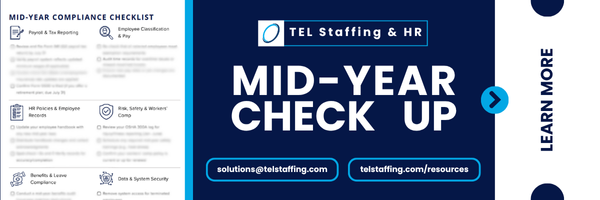
That’s why a mid-year payroll and compliance review is essential. A proactive check-in helps organizations maintain accuracy, stay compliant with changing regulations, and identify operational issues before they become larger problems.
In this quick read, we’ll cover what to review and why it matters.
Why a Payroll & Compliance Check-In Matters
Payroll errors and compliance gaps impact more than just finances—they directly affect employees and overall business operations.
Common consequences include:
- Employee dissatisfaction and turnover
- Penalties, fines, or audits
- Reputational damage
- Increased administrative workload
- Legal and regulatory risk
Conducting a mid-year review gives organizations time to correct issues, improve processes, and prepare for a smoother second half of the year.
What to Review During Your Check-In
1. Payroll Accuracy and Processes
Start by reviewing payroll operations for consistency and accuracy.
Evaluate:
- Employee pay rates and classifications
- Overtime calculations and time tracking
- Payroll deductions, including taxes and benefits
- Payroll schedules and processing timelines
Even minor payroll errors can reduce employee confidence and create costly administrative corrections.
2. Tax Compliance
Payroll tax compliance is one of the most important areas to review.
Assess:
- Federal, state, and local tax withholdings
- Timeliness of tax filings and deposits
- Employee W-4 information
- Year-to-date payroll reporting accuracy
Late or inaccurate tax reporting can result in penalties, audits, and unnecessary financial risk.

3. Employee Classification
Employee misclassification remains one of the most common compliance challenges for employers.
Review:
- Exempt versus non-exempt classifications
- Independent contractor versus employee status
- Alignment between job duties and classifications
Misclassification issues can lead to back pay obligations, fines, and legal exposure.
4. Benefits and Payroll Deductions
Ensure employee benefits deductions are accurate and properly documented.
Review:
- Health, dental, and retirement contributions
- Employer match calculations
- Adjustments from qualifying life events
- Compliance with benefits-related regulations
Errors in benefits administration can negatively impact both compliance and employee satisfaction.
5. Timekeeping and Leave Tracking
Accurate time and leave tracking are essential for both payroll accuracy and legal compliance.
Evaluate:
- Timekeeping systems and procedures
- PTO accrual and usage tracking
- Leave compliance, including FMLA and state-specific requirements
- Recordkeeping accuracy
Inaccurate tracking can lead to wage disputes, compliance violations, and increased legal risk.
6. Recordkeeping and Documentation
Strong documentation practices are critical in the event of an audit or compliance review.
Confirm that:
- Payroll records are complete and organized
- Required documentation is retained according to legal guidelines
- Audit trails are accurate and accessible
Well-maintained records strengthen compliance efforts and simplify reporting requirements.
7. Compliance Updates and Policy Reviews
Employment regulations continue to evolve throughout the year, making policy reviews especially important.
Assess:
- New or updated labor laws
- Internal payroll policies and procedures
- Alignment between company policies and employee handbooks
Staying current with compliance requirements helps reduce risk and maintain operational consistency.
How to Strengthen Payroll and Compliance Moving Forward
After completing your review, focus on improvements that support long-term accuracy and compliance.
Consider the following strategies:
- Standardize payroll processes to reduce inconsistencies
- Use technology to automate payroll and tax calculations
- Train managers and HR teams on compliance requirements
- Conduct routine audits throughout the year
Consistent oversight and proactive management help reduce errors and improve operational efficiency.
Final Thoughts
A payroll and compliance check-in may not be the most visible business initiative, but it is one of the most important. Reviewing your systems, processes, and compliance practices mid-year can help prevent costly mistakes and strengthen overall operations.
Taking time to evaluate payroll and compliance now can create a more stable, accurate, and efficient path through the remainder of the year.

Realigning Business Goals for the Second Half of the Year
By mid-year, HR leaders can see what is working, what is drifting, and where risk is building. A mid-year HR audit helps teams As the midpoint of the year approaches, many organizations begin asking the same question: Are we still on track to meet our goals? While the start of the year is often fueled by planning and ambition, the second half is where strategy is tested through execution.
That’s why mid-year is the ideal time to realign business goals. A strategic reset helps organizations stay focused, adapt to changing conditions, and position teams for a stronger finish.
In this quick read, we’ll cover what leaders should evaluate and how to refocus priorities for the remainder of the year.
Why Mid-Year Realignment Matters
Business conditions can shift quickly. Market changes, evolving customer expectations, operational challenges, and internal priorities may leave January’s goals less relevant by June.
Realigning your goals mid-year helps organizations:
- Refocus on the priorities that drive results
- Adapt to changing business conditions
- Improve clarity and accountability across teams
- Maximize performance during the remaining months of the year
Rather than continuing with outdated strategies, organizations can make informed adjustments that better support current objectives.
What to Review Before Realigning Goals
1. Performance Against Current Goals
Begin by evaluating progress against your original targets.
Ask questions such as:
- Which goals are on track, ahead, or behind?
- Where are teams performing well?
- Which areas are struggling to gain momentum?
- Are timelines and expectations still realistic?
A clear performance review creates a data-driven foundation for making strategic adjustments.
2. Business Priorities and Strategy
Goals should reflect the organization’s current direction—not just the assumptions made at the beginning of the year.
Review areas such as:
- Revenue and growth objectives
- Leadership priorities
- Market conditions and customer demand
- New opportunities or challenges
Ensuring goals align with current business priorities keeps teams moving in the right direction.
3. Resource Allocation
Mid-year is also an opportunity to evaluate whether resources are being used effectively.
Assess:
- Staffing levels and team capacity
- Budget allocation and utilization
- Technology, systems, or process gaps
Even well-defined goals can stall when teams lack the resources needed to execute effectively.
4. Workforce Performance and Engagement
Employee performance and engagement directly impact business outcomes.
Review:
- Performance trends
- Employee feedback or engagement survey results
- Team collaboration and manager feedback
Organizations with engaged and supported employees are better positioned to achieve revised goals successfully.
5. Processes and Operational Efficiency
In some cases, the issue isn’t the goal itself, it’s the process behind it.
Evaluate:
- Workflow bottlenecks
- Communication challenges
- Outdated or inefficient processes
Improving operational efficiency can increase productivity without requiring major changes to overall objectives.
Communicate Clearly
Transparency is essential during any strategic shift. Teams should understand:
- What is changing
- Why changes are being made
- How success will be measured moving forward
Clear communication helps maintain alignment and accountability.
Set Short-Term Milestones
Breaking larger goals into smaller milestones helps teams maintain momentum and track progress more effectively.
Monitor Progress Consistently
Don’t wait until year-end to evaluate results. Schedule regular check-ins to assess progress and make additional adjustments if needed.
Final Thoughts
Realigning business goals mid-year is not a sign of failure; it’s a sign of proactive leadership. Organizations that continuously evaluate and adapt are better equipped to navigate change, improve performance, and capitalize on new opportunities.
By reassessing priorities, refining strategy, and re-engaging teams, businesses can position themselves for a stronger and more successful second half of the year.erate more strategically, this review can be one of the most practical moves of the year.

Why a Mid-Year HR Audit Matters
By mid-year, HR leaders can see what is working, what is drifting, and where risk is building. A mid-year HR audit helps teams step back and make practical adjustments before small issues become larger problems.
Done well, this review helps organizations catch compliance gaps early, strengthen core processes, and reconnect people strategy to business goals.
The goal is not just compliance, but a clearer view of how your people systems are performing day to day.
Where to Focus Your Mid-Year HR Audit
The strongest audits start with legal and operational risk, then move into the systems that shape consistency, retention, performance, and growth.
Start with compliance
Start with labor law compliance. Because requirements shift regularly, this review should confirm that policies, classifications, and documentation still reflect current standards.
Focus on classification, wage and hour practices, required notices, and employment eligibility records.
- Employee classification (exempt vs. non-exempt)
- Wage and hour practices
- Required postings and notices
- I-9 and employment eligibility documentation
This is foundational work: when compliance slips, the consequences can quickly become expensive, distracting, and difficult to unwind.
Then look closely at documentation
Next, review the quality of your documentation. Accurate records reduce risk and give HR leaders a stronger basis for decisions.
This should cover personnel files, performance and disciplinary records, and benefits documentation.
- Personnel files (complete and organized)
- Performance reviews and disciplinary records
- Benefits enrollment documentation
When records are clean and current, HR is better positioned to respond quickly, support decisions, and reduce legal exposure.
Review the policies people rely on
Then ask whether your policies still reflect how the organization operates. They need to stay current to remain clear and enforceable.
Key areas include remote and hybrid work expectations, leave policies, and anti-harassment guidance.
- Remote/hybrid work policies
- Leave policies (including FMLA and PTO)
- Anti-harassment and DEI initiatives
If those policies are outdated or unclear, employees and managers are left to interpret them inconsistently, which increases risk.
Assess what your rewards strategy is signaling
The audit should also examine what compensation and benefits are signaling to employees. Pay and rewards affect retention, trust, and morale.
Review pay equity, benefits usage and satisfaction, and alignment with market benchmarks.
- Pay equity across roles and demographics
- Benefits use and satisfaction
- Alignment with market benchmarks
Compensation and benefits often shape retention more than leaders realize, especially when employees are comparing your offering to the market.
Examine how people enter the organization
It is also worth reviewing how people first experience the organization. Recruitment and onboarding should reflect current hiring conditions and help new employees ramp up quickly.
Look at time-to-fill, cost-per-hire, candidate experience, and onboarding completion.
- Time-to-fill and cost-per-hire metrics
- Candidate experience processes
- Onboarding completion and engagement
When hiring and onboarding run well, productivity starts sooner and employees are more likely to build momentum early.
Check whether performance systems are actually working
Mid-year is also the right time to assess whether performance systems are driving accountability, feedback, and growth.
Review goal alignment, manager feedback, and whether development plans are active in practice.
- Goal alignment with business objectives
- Manager feedback consistency
- Employee development plans
Strong performance systems create clarity and accountability, but they also shape how supported employees feel in their day-to-day work.
End with capability building
Finally, turn to capability building. Training and development should address current skill gaps while preparing future leaders.
Review training participation, priority skill gaps, and leadership development efforts.
- Participation rates in training programs
- Skills gaps in key teams
- Leadership development initiatives
When employees can see a path to growth, organizations are better positioned to keep talent engaged and reduce preventable turnover.
The bigger takeaway
A mid-year HR audit is less about checking boxes than understanding how well your people systems support the business. It gives leaders a chance to correct course and make smarter decisions for the second half of the year.
For teams that want to stay compliant and operate more strategically, this review can be one of the most practical moves of the year.

Mental Health in the Workplace: What Employers Can Do
Supporting Mental Health in the Workplace | Employer Guide
Mental health is no longer a secondary concern. It is a workplace priority.
Today’s employees are looking to their employers for more than just compensation. They want support, flexibility, and understanding, especially when it comes to mental well‑being. Organizations that acknowledge this shift and respond thoughtfully are better positioned to build engaged, resilient, and high‑performing teams.
Supporting mental health at work is not only compassionate. It is also strategic.
Why Mental Health Matters in the Workplace
Mental health has a direct and measurable impact on organizational outcomes, including:
- Productivity and quality of work
- Attendance and absenteeism
- Employee engagement and morale
- Retention and long‑term loyalty
When employees struggle in silence, performance often declines long before the issue becomes visible. Ignoring mental health challenges does not make them disappear. Instead, they often compound and create ripple effects that affect teams, managers, and the broader business.
Recognize the Signs Early
Employers and managers are not expected to diagnose mental health conditions, but awareness is critical.
Common signs that an employee may be struggling include:
- Persistent burnout or exhaustion
- Withdrawal from colleagues or disengagement from work
- Noticeable decreases in performance or focus
- Increased absenteeism or frequent last‑minute time off
Early recognition allows employers to respond with empathy and support rather than discipline or assumptions. The sooner support is offered, the better the outcome for both the employee and the organization.
Provide Meaningful Mental Health Resources
Awareness alone is not enough. Effective support requires action.
Organizations can demonstrate commitment to mental well‑being by offering resources such as:
- Employee Assistance Programs (EAPs)
- Designated mental health or wellness days
- Access to counseling or therapy services
- Health benefits that include mental health coverage
When resources are accessible, clearly communicated, and easy to use, employees are far more likely to take advantage of them. Meaningful support shows employees that mental health is treated with the same seriousness as physical health.
Normalize the Conversation Around Mental Health
A supportive mental health strategy starts with culture.
Organizations can help reduce stigma and encourage openness by:
- Promoting open dialogue about stress, burnout, and well‑being
- Encouraging leadership to share transparently and lead by example
- Reinforcing that seeking help is a strength, not a weakness
When mental health conversations are normalized, employees feel safer speaking up before challenges escalate. Psychological safety builds trust, and trust is essential to a healthy workplace.
Train and Support Managers
Managers play a pivotal role in employee well‑being. They are often the first to notice changes in behavior and performance, but many feel unprepared to respond.
Employers can support managers by providing:
- Training on recognizing burnout and stress signals
- Guidance on compassionate, effective communication
- Clear pathways and resources to direct employees to appropriate support
When managers are equipped with the right tools and knowledge, they can support their teams with confidence while maintaining appropriate boundaries.
Final Thought: Supporting Mental Health Is Smart Business
Investing in workplace mental health is not only the right thing to do. It is also a smart business decision.
Organizations that prioritize mental well‑being see stronger engagement, improved retention, and more sustainable performance. By creating a culture of awareness, support, and understanding, employers can build workplaces where both employees and businesses thrive.
Mental health support is not a trend. It is an essential part of the modern workplace.
Ready to build a workplace that supports both performance and well-being?
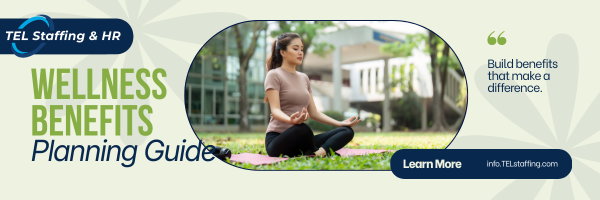
Download TEL Staffing & HR’s Wellness Benefits Guide to access tools and strategies for creating a healthier, more productive workforce.

How to Communicate Benefits for Maximum Impact
How to Communicate Employee Benefits Effectively
You can offer the most competitive and comprehensive benefits in the world, but if employees do not understand them, they will not use them.
Benefits communication is the bridge between offering value and actually delivering it. Without clear, consistent messaging, even the best benefits packages can fall flat, leading to confusion, low participation, and missed opportunities to support your workforce.
Effective communication does more than explain benefits. It turns them into something employees trust, remember, and use.
Why Benefits Communication Often Fails
Most companies do not struggle with what they offer. They struggle with how they explain it.
Benefits communication commonly falls short because it:
- Happens only once a year during open enrollment
- Relies on dense, overly complex language
- Lacks follow‑up or reinforcement throughout the year
When benefits are introduced all at once and then rarely mentioned again, employees feel overwhelmed and disengaged. The result is predictable: confusion, low utilization, and employees who don’t fully understand what’s available to them.
Keep It Simple and Clear
Clarity is the most powerful driver of benefits engagement.
Employees do not want to decode insurance terminology or sift through pages of fine print. They want to understand how benefits apply to their lives, quickly and with confidence.
To simplify communication:
- Use plain, conversational language
- Break information into short, focused sections
- Highlight key takeaways instead of overloading details
- Focus on the question every employee asks: “What does this mean for me?”
When benefits are easy to understand, participation naturally increases.
Use Multiple Communication Channels
Employees consume information in different ways, and relying on a single channel limits your reach.
Effective benefits communication uses a mix of formats to reinforce key messages, such as:
- Emails with concise reminders or updates
- Quick‑reference guides or FAQs
- Short videos explaining specific benefits
- Manager‑led conversations and team discussions
Hearing the same information in multiple contexts increases comprehension and retention. Repetition is not redundancy. It reinforces understanding.
Make Benefits Communication Ongoing
Benefits should not feel like a seasonal event. They should feel like a year‑round resource.
Keeping benefits top‑of‑mind helps employees understand when and how to use them. Consider:
- Sending reminders or spotlight messages throughout the year
- Highlighting one benefit each month
- Sharing real‑life examples of how employees can use specific benefits
Consistent communication helps employees connect benefits to real situations instead of viewing them as abstract offerings.
Encourage Questions and Open Conversation
Clear communication is not just about talking. It is also about listening.
Employees should feel comfortable asking questions and seeking clarification without fear of judgment. Creating space for dialogue:
- Builds trust and transparency
- Reduces misinformation
- Helps employees feel more confident using their benefits
Offering dedicated Q&A sessions, accessible HR support, or manager check‑ins ensures employees don’t feel left navigating benefits on their own.
Final Thought: Communication Turns Benefits Into Value
Benefits do not create impact simply by existing. They create impact when employees understand and use them.
By communicating benefits clearly, consistently, and empathetically, organizations transform their offerings from line items into meaningful tools that support employee wellbeing and engagement.
Strong communication turns benefits into real value. That value strengthens both employees and the business.
Want templates, communication ideas, and tools to improve benefits engagement?
Download the Wellness Benefits Guide from TEL Staffing & HR to strengthen how your team understands and uses their benefits.